
Floyd County Multi-Day Arrest Record
Floyd County, Kentucky has no official 72-hour, weekly, or dated arrest blotter online. The Floyd County Sheriff's Office is still the right first stop. Its pages state no archive depth or publication day. Nor do they list a weekend carryover rule, source-agency field, or photo policy. The county jailer offers no searchable historical log either.
That gap changes the job. Work backward from a date and an agency. Do not count on a feed that does not exist. Ask the Floyd County Detention Center for its jail register covering your dates. Ask the arresting department for the incident record. Kentucky CourtNet then picks up the case after filing. News stories can help with leads, but they cover the newsworthy, not every booking.
Trace Floyd County Blotter Dates
Start with a date range, never a third-party index. Keep the dates straight. An arrest date, a booking date, a court date, a story's publication date, and a later archive date can all differ by days or more, so a precise request names which one it means.
- Write down the person's full name, likely agency, location, and a narrow date range.
- Ask the Floyd jailer at (606) 886-8021 whether the person was committed, discharged, or transferred during that range.
- Contact the named police agency for its arrest or incident report if it created the event record.
- Search Floyd County in Kentucky CourtNet for the judicial trail and later disposition.
- Use dated local reporting only to locate a reported event, then verify its claims with the source agency.
Need current custody rather than several days of records? Use Arrests Last 24 Hours for that narrower question. A multi-day inquiry fits document requests and court chronology better, since the county has no verified online archive.
Floyd Arrest-Log Fields to Compare
No official Floyd online entry exists to copy columns from. These fields come from Kentucky jail-register categories and the local records map. Compare them across sources rather than trusting a news post or private index to hold the full booking record.
| Field | How to read it |
|---|---|
| Name and identifying details | Confirm the right person with date, age, agency, and case information. |
| Arrest and committed dates | The event date and county intake time may not match. |
| Arresting or committing authority | The police agency may differ from the jail custodian. |
| Offense or booked charge | An charge entered at intake, subject to later court change. |
| Bond and court destination | Time-sensitive details that can change after first appearance. |
| Discharge, days held, remarks | Jail-register items that may clarify release or transfer. |
| Photograph | An intake image only if one exists and is released; a news image may be something else. |
Court results arrive later, after booking. The outcome may be dismissal, diversion, a plea, an acquittal, or a conviction. So read CourtNet after the booking record, never as a substitute for it.
Floyd Arrest News Is Selective
Floyd County Chronicle & Times, WYMT, WSAZ, and WKYT each report selected incidents, agency operations, and arrests. None is a continuous county jail roster. Coverage runs on a story-driven cadence. A photo in a story may be a scene shot, an agency handout, or a social-media image. It may not be a booking photograph at all.
The WYMT Prestonsburg report shows the value of a dated story. It can name the arresting police department and the detention destination.
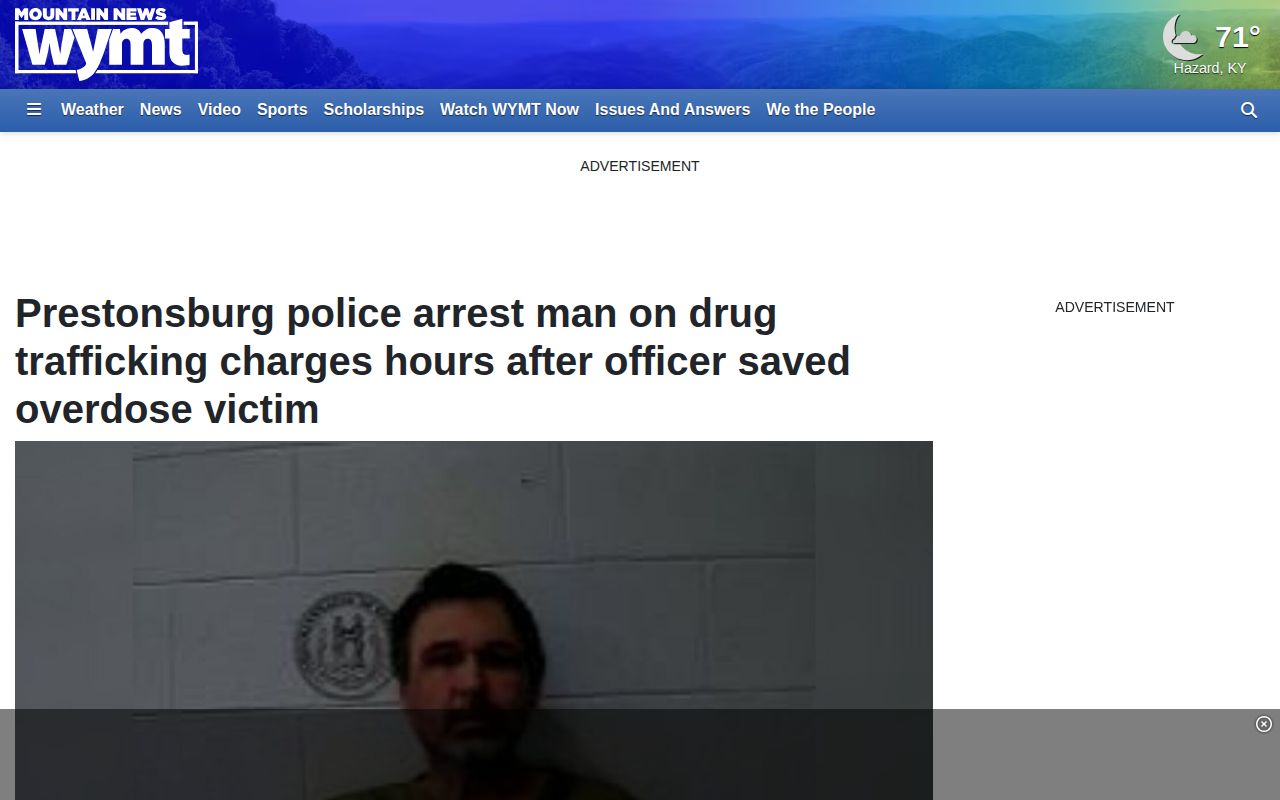
The story gives event context, not a full blotter and not the final charge outcome.
A second WKYT Floyd County report shows the same event-driven pattern in regional coverage.
A dated story is a useful lead. It cannot account for every booking made in that period.
Floyd Weekend Arrest Timing
No official source says Floyd County posts a weekend surge on Monday. None confirms holiday bookings batched into a weekly update or a refresh at a set hour. Those assumptions stay assumptions. A late-week arrest can produce records on very different schedules. Jail intake comes first. A VINE status may follow. Then comes a CourtNet filing or appearance. A news story appears only if an editor picks it up.
For a weekend span, request the full date range from the jailer. Say whether you mean arrest, commitment, or discharge dates. If city police made the arrest, ask that agency for the event report. You will not miss a record just because its court or news date falls outside the weekend.
Note: Holidays can affect office access, but no Floyd-specific delayed-posting rule was found; verify timing directly with the custodian.
Unofficial Floyd Arrest Indexes
Private county pages sit well behind the official routes. RecentlyBooked's Floyd page claims multiple daily refreshes and monitoring of county sources, yet its last-30-days panel showed no recent entries. That mismatch is exactly why it cannot serve as the official archive. Busted Newspaper runs a Floyd County section, and Mugshots.com keeps a historical index with year and letter navigation. Their update and removal rules belong to them, not the county.
Treat such pages as date-sensitive discovery aids at best. They can be stale, incomplete, or misidentified, and they rarely show release or court outcomes. An old listing proves nothing about present custody. Current status belongs with the jailer or VINE. Case outcomes belong with CourtNet.
Floyd Jail Registers and Archives
Kentucky's County Jailer Records Retention Schedule sets the historical framework here. The key series is L2674, the Jail Register or Inmate Register Book. It logged name, committed date, sentence, and committing authority. Offense, color, sex, officer, and age went in too. Discharge, order, days in jail, and remarks filled out the page. Destruction is scheduled five years after release. That clock governs the register series itself. It says nothing about how long a web page stays up.
Floyd County posts no digital booking-photo retention rule. It documents no transfer to the Kentucky State Archives either. So ask the current custodian directly. A register may still sit in storage. It may have been lawfully destroyed once its five-year window closed under the schedule. Or it may have been transferred elsewhere. For older crime coverage, one strong lead stands out. The Floyd County Public Library's Floyd County Times collection covers the county's past. The library holds no current jail records, though, unless a transfer is actually verified.
Any records request should name the series, the person, and the date span. Say whether you want inspection or copies. KRS 61.872 directs requests to the agency likely to hold the document. If that office lacks it, ask who the custodian is now. Keep one thing clear: retention rules promise nothing about online access. A record can vanish from a website while the paper copy still exists.
Read Floyd Arrests Through Court
A police blotter is an early snapshot of an arrest. Booking language can shift. Review, arraignment, or later motions can all change it. The same name may appear more than once, too. Match the booking date and court case number instead of trusting a name alone.
Split the work across three sources. The county detention record covers commitment and discharge; the arresting agency's report covers the incident; CourtNet covers the outcome. That approach is slower than scrolling a feed. It fits the records Floyd County actually offers, though, and it cuts the risk of repeating stale or incomplete information from a single blotter entry.